The Six Petals Process Chart: Making Business Data Beautifully Clear
You’ve been staring at the spreadsheet for hours. The numbers tell a story, but it’s buried under rows and columns, hidden in pivot tables and vague trends. You need to present this to your team, to your clients, or to yourself to make a decision, but translating that raw business data into a coherent narrative feels like solving a puzzle blindfolded. This is where the Six Petals Process Chart changes the game. It’s not just another diagram; it’s a visual framework designed to unearth clarity from complexity.
Beyond the Spreadsheet: A Visual Compass for Your Data
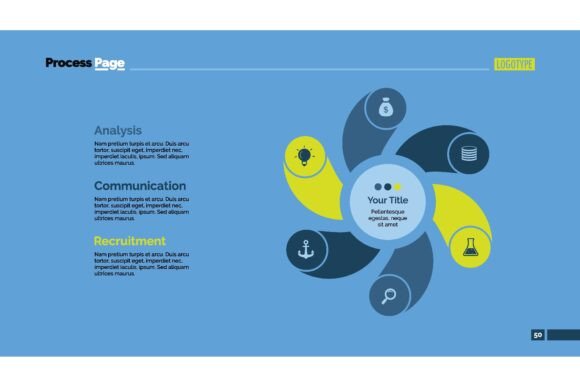
At its core, the Six Petals Process Chart is a simple, powerful idea. It organizes information around a central goal, using six distinct “petals” to represent key phases, components, or data streams. Think of it as a map. Instead of a linear, step-by-step list that can feel rigid, the floral motif creates a holistic view. Each petal is connected to the center, showing how different pieces of business data—whether it’s sales figures, project milestones, marketing channel performance, or team feedback—interrelate and contribute to the whole. It turns a labyrinth of numbers and notes into an easily navigable landscape.
Why does this matter in real, day-to-day work? Because our brains process visual information far faster than text. A stakeholder can glance at a well-crafted Six Petals Process Chart and instantly understand the balance between, say, six critical risk factors in a new venture, or the progress across six departments in a quarterly review. It reduces meeting time, clarifies strategic discussions, and cuts through the noise.
Where and When This Chart Becomes Your Secret Weapon
The use cases are as varied as the people who need clarity. Let’s walk through some real scenarios.
For the Entrepreneur or Small Business Owner
You’re launching a new product. You have data on costs, market research, production timelines, marketing plans, logistics, and customer support. Staring at six separate documents is overwhelming. Mapping each category onto a petal of the Six Petals Process Chart gives you a single-page strategic dashboard. You can see visually if one area is underdeveloped—perhaps the “logistics” petal is sparse compared to the robust “marketing” petal—highlighting resource gaps before they become crises. It becomes your living business plan, adaptable and clear.
For the Educator, Trainer, or Workshop Leader
Explaining a complex process, like the stages of a software development lifecycle or the principles of effective communication, can leave students lost in a sea of bullet points. Using the Six Petals Process Chart as a teaching aid, you can assign each stage or principle to a petal. This visual anchor helps learners grasp the system as an interconnected whole, not an isolated sequence. It’s a tool for building comprehension, not just delivering information.
For the Project Manager or Team Lead
Weekly status updates often devolve into fragmented reports from different team members. By adopting a shared Six Petals Process Chart template—where petals might represent Design, Development, Testing, Content, Legal, and Deployment—you create a unified progress snapshot. The team can see how their work interlinks, fostering collaboration and accountability. It visually answers the crucial question: “How are we doing, as a whole?”
For the Freelancer or Creator
Managing your own workflow involves juggling client acquisition, project execution, finance, skill development, marketing, and administrative tasks. It’s easy to over-focus on one and neglect others. A personal Six Petals Process Chart on your desk or digital workspace acts as a balance check. It’s a reminder to nurture all aspects of your professional ecosystem, ensuring your creative or freelance business grows sustainably.
Choosing and Using the Framework Effectively
Before you apply the Six Petals Process Chart to your next challenge, a few practical considerations will maximize its impact.
First, define your central core. What is the ultimate goal, project, or system you’re visualizing? This becomes the heart of the flower. It must be concise and unambiguous.
Second, be disciplined in selecting your six categories. The power of the model is in its constraint. Force yourself to distill your business data or process into six essential elements. This isn’t about cramming in everything; it’s about identifying the true pillars. If you have seven crucial items, you need to merge or redefine until you have six. This distillation is often where the deepest strategic insight occurs.
Third, consider your audience. The same underlying data can be visualized differently. For an internal team, petals might use technical jargon. For a client presentation, those same petals should be renamed with client-focused outcomes. The adaptability of the template is a key feature.
Finally, remember it’s a tool, not a magic trick. The Six Petals Process Chart organizes and clarifies information; it doesn’t generate the information itself. Its value comes from your thoughtful input. Start with messy data, use the chart to structure it, and you’ll end with a clear story ready for action.
The Real Outcome: From Confusion to Confidence
The ultimate benefit of integrating this visual approach isn’t just a prettier presentation. It’s tangible outcomes: faster decision-making, aligned teams, clearer personal strategies, and more engaged audiences. When business data is trapped in spreadsheets and documents, it’s inert. The Six Petals Process Chart unlocks it, giving it a form that people can quickly understand, discuss, and act upon.
It meets a fundamental need: in a world saturated with information, we need filters that highlight meaning. This chart provides that filter, blending logical structure with an aesthetic that feels intuitive and accessible. Whether you’re planning a community event, auditing a department’s performance, designing a curriculum, or pitching to investors, it offers a common language for complexity. You stop explaining the data and start showcasing the story it tells, moving from confusion to confidence with a simple, elegant map.