The Four-rayed Star Percentage Chart: A Game-Changer for Business Data Presentation
In the bustling world of business intelligence, clarity is king. Decision-makers are drowning in spreadsheets and dashboards, struggling to extract meaningful stories from raw numbers. It's a common pain point: how do you make percentages, comparisons, and performance metrics not just visible, but visually compelling? Enter a powerful solution: the Four-rayed Star Percentage Chart. This isn't just another chart type; it's an innovative diagram designed specifically to cut through complexity and elevate your communication.
What Exactly is a Four-rayed Star Percentage Chart?
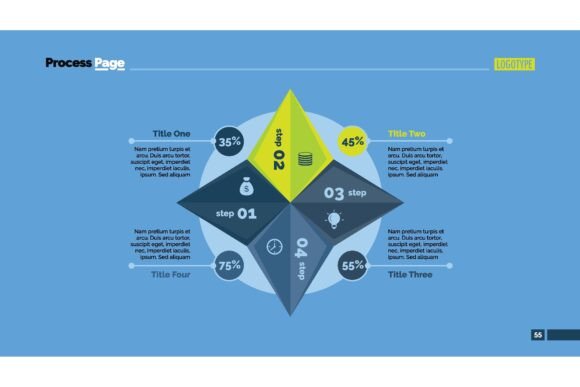
Imagine a star with four distinct rays, each representing a different data variable or category. The length or fill of each ray corresponds to a percentage value, allowing for immediate visual comparison across multiple metrics simultaneously. Unlike a standard pie chart that shows parts of a whole, or a bar chart that compares values side-by-side, the Four-rayed Star Percentage Chart integrates comparison into a single, cohesive symbol. It's a meticiously crafted visual tool that transforms abstract numbers into an intuitive, geometric narrative. Its design excellence lies in its simplicity and symbolic power—a star naturally draws the eye and conveys concepts of achievement, balance, and assessment.
Core Characteristics and Design Genius
The strength of the Four-rayed Star Percentage Chart for business applications comes from its inherent characteristics.
- Multi-Variable Comparison in One View: You can display four key performance indicators (KPIs)—like customer satisfaction, sales growth, operational efficiency, and market penetration—in one graphic. This eliminates the need to toggle between multiple charts.
- Intuitive Proportional Understanding: The human eye easily gauges relative lengths or shaded areas. Seeing one ray significantly longer than another communicates dominance or success instantly, without reading exact figures.
- Versatility in Application: The chart is a graphic component, not a rigid template. It can be rendered in minimalist line art for a sleek report, filled with vibrant colors for a presentation slide, or incorporated as an icon within a larger infographic.
- Symbolic Resonance: The star shape inherently links to goals, ratings, and excellence. Using it to present data subtly reinforces positive messaging around targets and achievements in your business analysis.
Transforming Complex Data into Clear Narratives
The primary purpose of any data visualization is to tell a story. A spreadsheet of percentage-based survey results is inert. A Four-rayed Star Percentage Chart animates it. For instance, a product manager analyzing post-launch feedback can use the four rays to represent: ease of use (85%), feature satisfaction (70%), design appeal (90%), and value perception (65%). The resulting star visually highlights where the product shines (design and ease of use) and where there's room for improvement (value perception). This instant narrative empowers quicker, more confident strategic discussions.
This transformation is crucial for research endeavors and statistics communication. When presenting research findings to a non-technical audience—say, stakeholders in a healthcare business—the chart can illustrate the percentage breakdown of patient outcomes across four treatment pathways. The clarity it provides turns dense data-rich insights into an engaging, comprehensible experience, ensuring the core message isn't lost in numerical detail.
Where It Fits into Modern Business Workflows
This tool seamlessly integrates into contemporary professional ecosystems.
- Reporting & Dashboards: Static monthly reports become more dynamic. Embedding a Four-rayed Star Percentage Chart in a dashboard to track quarterly department goals (e.g., Finance, Marketing, R&D, HR) gives leadership a rapid status snapshot.
- Presentation Slides: Replace bullet points listing percentages with a single, impactful star graphic. It focuses audience attention, supports the speaker's narrative, and makes slides more memorable.
- Client Deliverables & Infographics: For consultancies or agencies, using this chart in client reports adds a layer of professional, creative design. It demonstrates an effort to present insights in the most client-friendly format, enhancing perceived value.
- Internal Communication: Share progress on strategic pillars in company newsletters or internal blogs. A Four-rayed Star Percentage Chart visualizing progress on sustainability, innovation, diversity, and profitability goals is far more effective than a text-heavy paragraph.
Practical Benefits for Your Projects
Adopting the Four-rayed Star Percentage Chart offers tangible advantages that go beyond aesthetics.
Enhanced Comprehension and Recall: Visual information is processed faster and remembered longer than text or numbers alone. Using this chart ensures your data points stick with your audience.
Streamlined Design Process: For teams without dedicated designers, having a versatile, effective chart format like this saves time. It's a reliable creative twist you can apply repeatedly without reinventing the wheel for each project.
Focus on Key Metrics: The four-ray structure forces discipline. It encourages you to distill your analysis down to the four most critical percentages, promoting sharper focus and more strategic data selection.
Universal Accessibility: The concept is easy to explain. Unlike some complex statistical charts, this one can be understood by viewers across all levels of data literacy, from analysts to executives, making it perfect for cross-functional meetings.
Considerations Before Implementation
While powerful, the Four-rayed Star Percentage Chart is a specialized tool. Here are factors to consider for optimal use.
- Data Suitability: It is ideal for displaying four comparable percentage values (0-100%). It's not suitable for time-series data, absolute numbers, or datasets with more than four core categories without adaptation.
- Design Consistency: Ensure consistent scaling. If one ray represents 50% and another 100%, the difference in length or fill should be precisely proportional to avoid misleading visuals.
- Contextual Labeling: Always clearly label what each ray represents. The chart's power is unlocked only when viewers know what each axis signifies. Use legends or direct annotations.
- Tool Availability: Check if your preferred presentation software (PowerPoint, Google Slides), reporting tool (Power BI, Tableau), or graphic design platform has a template or allows easy creation of this custom chart shape. Often, it can be built using simple vector tools.
Real-World Scenarios and Recommendations
Let's explore concrete examples to see its application.
Scenario 1: Marketing Campaign Post-Analysis. A marketing team evaluates a campaign. They use the Four-rayed Star Percentage Chart to visualize: Reach (percentage of target audience contacted - 95%), Engagement (click-through rate - 15%), Conversion (lead generation rate - 8%), and ROI Positive Feedback (based on survey - 80%). The chart instantly shows high reach and positive feedback, but pinpoints engagement and conversion as weaker rays, directing the post-campaign debrief towards those specific topics.
Scenario 2: Employee Skills Portfolio. In a talent development business system, an employee's competency assessment can be visualized. The four rays could represent technical skill (90%), leadership capability (60%), collaboration (85%), and innovation (70%). This provides a clear, balanced view for career development conversations, far more intuitive than a table of scores.
Our Recommendation: Start by identifying a recurring report or presentation in your workflow that relies on comparing four key percentages. Pilot the Four-rayed Star Percentage Chart there. Use color coding aligned with your brand palette. Gather feedback on whether the insight was communicated more effectively. Its versatility means a successful pilot can lead to adoption across many of your infographics, templates, and reports.
In a data-driven era, the medium is as important as the message. The Four-rayed Star Percentage Chart offers a sophisticated yet accessible way to permeate your business communications with clarity. It bridges the gap between analytical rigor and human understanding, ensuring that your valuable insights don't just exist—they resonate, inform, and inspire action. By leveraging this unique graphic component, you equip your team not just with data, but with a compelling visual story.