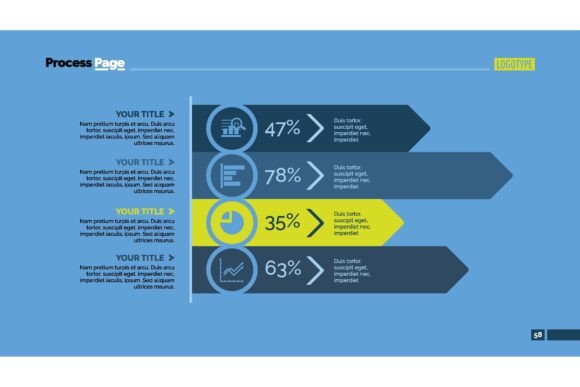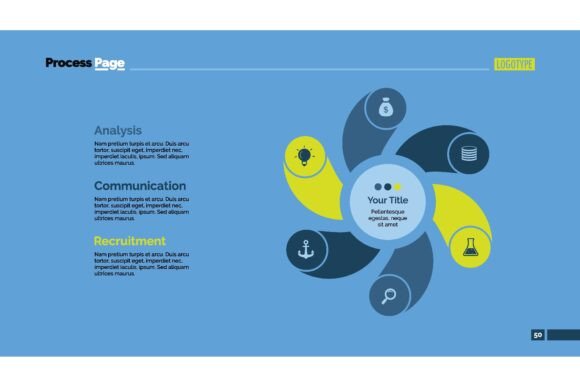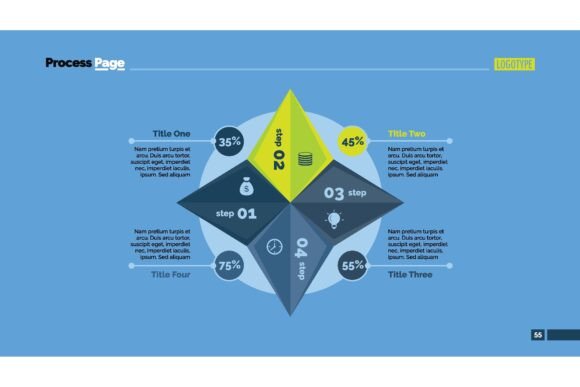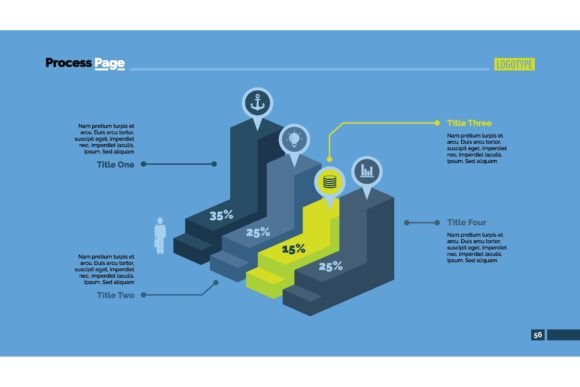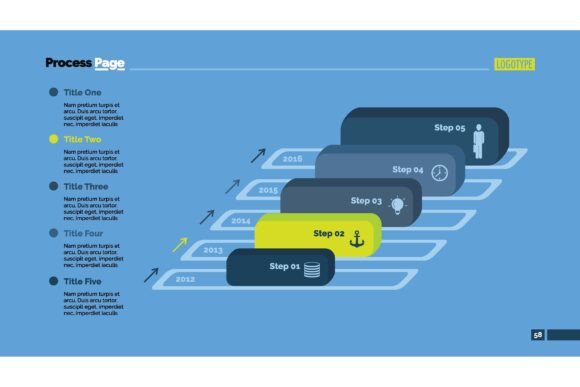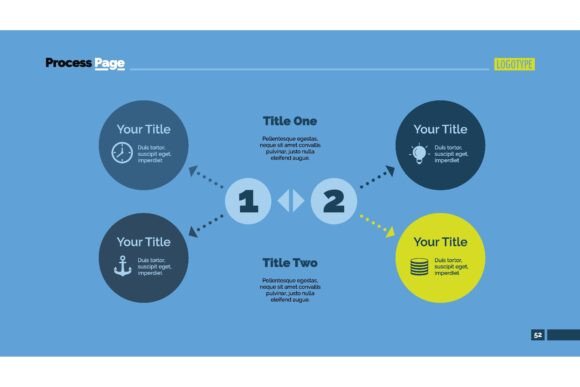
The Four Ideas Process Chart for Business Data Visualization
In the world of business, data is abundant, but insight is precious. Transforming raw numbers into a clear, compelling narrative is a challenge faced by professionals every day. The Four Ideas Process Chart for Business Data is designed specifically to solve this problem. It is not merely another template; it is a structured visualization methodology that uses a circular diagram format to map out four core concepts, phases, or milestones central to your strategy.
Why a Structured Visual Framework Matters
When you present data, the goal is to inform, persuade, and guide. A scatter of bullet points or a dense spreadsheet often fails to achieve this. The circular design of the Four Ideas Process Chart creates a natural focal point. It visually implies connection, cycle, and progression—concepts inherently linked to growth, strategy, and management. This format immediately signals to your audience that the information is interconnected and part of a larger story.
For a marketing team presenting a new campaign funnel, or a manager illustrating quarterly strategic pillars, this chart provides an immediate visual hierarchy. It helps the viewer understand that each “idea” is distinct yet part of a unified whole. This clarity is the first, and perhaps most critical, benefit: it organizes complexity into simplicity.
Transforming Abstract Data into Engaging Stories
The true power of the Four Ideas Process Chart lies in its ability to narrate. Consider your business’s growth story: Launch, Growth, Optimization, and Scale. Placing these in the four segments of the chart creates a visual journey. Each segment can hold key metrics—customer acquisition numbers, revenue growth percentages, efficiency ratios—but presented within this narrative frame, the data becomes a story of achievement and ambition.
This is invaluable for presentations to stakeholders, board members, or even your own team. It moves beyond “what” the numbers are to “why” they matter and “how” they connect. An educator using this chart to explain economic cycles, or a freelancer showcasing a client project’s phases (Research, Design, Development, Launch), leverages the same principle: data gains meaning through context.
Practical Benefits for Professionals and Creators
Who benefits most from integrating this chart into their workflow? The applications are broad, but particularly meaningful for roles where communication and strategic clarity are paramount.
- Entrepreneurs & Small Business Owners: You are often crafting pitches and plans. Using the Four Ideas Process Chart to visualize your business model’s four key pillars—say, Product, Market, Operations, Finance—creates a digestible and professional overview that can be far more effective than text-heavy documents.
- Marketers & Content Creators: For building infographics or campaign summaries, this chart offers a ready-made structure. Mapping a content strategy through Ideation, Creation, Distribution, and Analysis in a circular flow instantly communicates a process, making your marketing narrative coherent and visually engaging.
- Educators & Trainers: Explaining complex processes in management or economics becomes simpler. The chart can frame concepts like the four stages of a business cycle or the components of a strategic management model, aiding comprehension and retention.
- Consultants & Freelancers: When presenting analysis or project proposals to clients, this tool helps package your insights. Framing your recommendations around four key actionable ideas shows structured thinking and a clear path forward.
Enhancing Efficiency and Strengthening Communication
Adopting a consistent visual framework like the Four Ideas Process Chart can save significant time. Instead of designing a new chart for every presentation, you adapt a proven structure. This efficiency allows you to focus on the content of your data rather than the form of its presentation. Furthermore, it strengthens internal and external communication. When a team uses a common visual language to discuss strategy—seeing the four quarterly priorities laid out in the chart—alignment improves. Misunderstandings from fragmented or poorly presented data are reduced.
It also simplifies decision-making. By forcing the distillation of your strategy or analysis into four core ideas, the chart encourages prioritization and focus. It asks, “What are the four most critical elements here?” This constraint is creatively productive, helping to cut through noise and identify true strategic milestones.
Realistic Applications and Considerations
Let’s explore a concrete example. A retail business analyzing its year might use the chart to showcase: Customer Engagement, Supply Chain Efficiency, Digital Transformation, and Financial Resilience. Each segment contains key performance data, but the circular diagram tells the story of a holistic, multi-faceted year of operation. This is far more impactful for an annual report than four separate bar graphs.
However, it’s important to consider fit. The Four Ideas Process Chart is ideal for representing a set of four complementary concepts, stages, or pillars. It is less suitable for linear timelines with many steps or for displaying purely quantitative data comparisons without a narrative thread. For those needs, other charts may be more appropriate. The key is to match the tool to the message: use this chart when your data has a core narrative of four interconnected parts.
When implementing it, start by clearly defining your four ideas. Ensure they are logically grouped and of comparable importance to maintain the visual balance and integrity of the chart. The design should support the content, not distract from it. Use clear labels and integrate data points—like growth percentages or milestone dates—directly within each segment to reinforce the link between the idea and its measurable outcome.
A Tool for Capturing Your Strategic Journey
Ultimately, the Four Ideas Process Chart for Business Data is more than a visualization; it’s a thinking tool. It encourages you to structure your business narrative around pivotal ideas. It captures your strategic journey in a format that resonates because it mirrors how we often conceptualize cycles and foundations: in core, connected groups.
For the professional seeking to elevate reports, the creator aiming to design standout infographics, or the entrepreneur needing to compellingly share a vision, this chart offers a practical path. It bridges the gap between data and story, between analysis and communication. By providing a visually compelling and logically clear framework, it helps you not only show your data but also tell its significance, turning information into insight and strategy into a shared understanding.