The Modern Creator's Toolkit: Embracing Versatile Illustration Assets Like the Boy in Safari Outfit
In today's fast-paced digital landscape, the demand for high-quality, adaptable visual content is relentless. Professionals across disciplines—from marketing to app development—require resources that are not only aesthetically compelling but also deeply functional within modern workflows. This is where specialized illustration sets, such as the Boy in Safari Outfit, transition from mere graphics to essential strategic assets. They represent a shift in how creators source and utilize imagery, moving away from rigid, single-use stock photos towards dynamic, editable vector collections.
Beyond a Simple Graphic: What is the Boy in Safari Outfit?
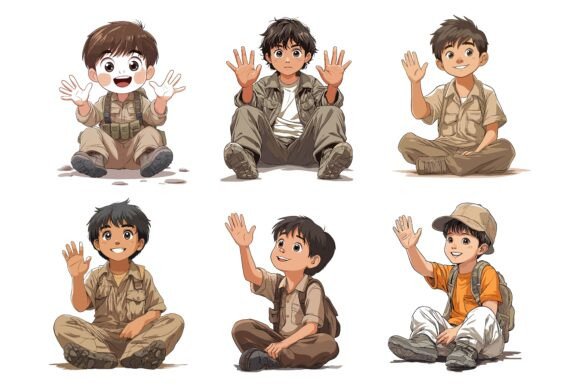
The Boy in Safari Outfit is more than a charming character illustration. It is a meticulously crafted vector asset, delivered in AI and EPS formats, designed for seamless integration into professional projects. The illustration itself evokes themes of adventure, curiosity, and exploration, making it inherently versatile for narratives around discovery, education, travel, or youth-focused initiatives. However, its true value lies beneath the surface: in its technical construction and the creative freedom it grants the user.
This asset is part of a broader Special AI EPS Collections, a suite of illustrations built for utility. The file includes both AI EPS and JPG versions, ensuring compatibility across different stages of a project, from editing to final implementation. Designed for both Mac and Windows users, with a neatly organized file and layer structure, it exemplifies a new standard for digital asset delivery. The perfection in details and consistency across such collections means they can function as coherent visual systems, not isolated elements.
Alignment with Contemporary Creative and Business Trends
The relevance of assets like the Boy in Safari Outfit is inextricably linked to several converging trends. Firstly, the brand personalization movement demands that companies and creators possess unique visual identities. Generic stock imagery no longer suffices. An editable EPS file allows this illustration to be transformed—colors altered, elements modified—to align perfectly with a specific brand palette and ethos, enabling a level of customization previously requiring custom illustration commissions.
Secondly, the multi-platform content imperative means a single asset must perform across print, web, symbols, and apps. The vector nature of this set makes it inherently scalable and suitable for all these mediums without loss of quality. A marketer might use the Boy in Safari Outfit in a printed brochure, a web banner, and as an icon within a mobile application, ensuring consistent brand messaging everywhere.
The Shift in Creator Workflows and Expectations
Modern workflows are integrated and agile. Professionals often operate within software ecosystems where assets must move fluidly between design, prototyping, and presentation tools. The provision of the file in AI and EPS formats speaks directly to this need. An infographic designer, for instance, can open the AI file directly in Adobe Illustrator, leverage the organized layers to isolate the boy's hat or binoculars, and incorporate those elements seamlessly into a larger data visualization. The time saved in asset preparation is substantial.
Furthermore, there is an increasing expectation for atomic design principles—building systems from smaller, reusable components. An illustration set like this, with its clean structure and consistency, can serve as a foundational component in a larger UI symbol library or brand illustration kit. A freelancer building a client's visual system can use this asset as a starting point, editing and modifying it to create a family of related icons and characters, ensuring visual coherence across all touchpoints.
Why This Approach Garners Attention
People are paying attention to professionally packaged illustration assets because they solve a critical pain point: the gap between creativity and efficiency. The promise of being able to edit it, change colors and modify the icon so easily addresses the core desire for control and speed. An entrepreneur launching an eco-tourism app can quickly adapt the Boy in Safari Outfit to match the app's interface colors, perhaps changing the outfit to green tones, without needing to hire a designer for minor iterations.
This also connects to larger developments in technology and accessibility. As design tools become more powerful yet more user-friendly, a wider range of professionals—not just graphic designers—are engaging in visual creation. Marketers, content strategists, and product managers need assets that are "creator-friendly." The neatly organized layers and clean details empower these non-specialists to make professional-grade adjustments confidently.
Practical Applications and Observations
Consider a children's educational publisher. They might license the Boy in Safari Outfit illustration set. In practice, they could use the base JPG for quick placeholders in layout drafts. Then, in final production, their design team uses the AI files to create variations: one boy holding a map for a geography section, another with a magnifying glass for a science module, all by simply modifying the provided vector elements. The consistency of the character across books establishes a recognizable friend for young readers.
For a digital agency, such assets expedite prototyping. A concept for a wildlife conservation campaign website can be mocked up rapidly using the illustration as a key visual. The ability to instantly change the color scheme from warm safari tones to cooler blues for an aquatic conservation variant allows for rapid client presentations and iteration based on feedback, significantly shortening the project cycle.
The Forward-Looking Value of Investment in Quality Assets
Choosing to Buy now and start using this awesome illustration is not merely a transaction; it's an investment in a more fluid and empowered creative process. It reflects a strategic understanding that in the current market, visual agility is a competitive advantage. As consumer expectations for engaging, personalized visual content rise, the tools to produce that content must evolve accordingly.
The Special AI EPS Collections, exemplified by the Boy in Safari Outfit, are at the forefront of this evolution. They bridge the worlds of artistic expression and technical pragmatism. They acknowledge that today's creator is often a hybrid—a strategist with a visual mindset, or a designer with business objectives. By providing assets that are beautiful, organized, and fundamentally malleable, they empower professionals to meet changing needs without compromising on quality or vision. The result is not just a single project enhanced, but a workflow transformed for the long term.