Office Stationery as a Creative Education Toolkit
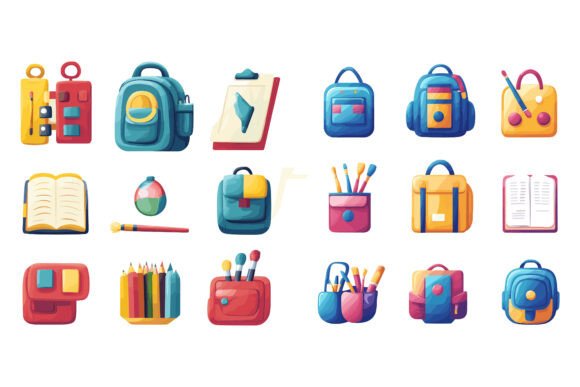
The humble items that fill our desks and classrooms—pencils, notebooks, rulers, staplers—are more than just tools for organization. Office Stationery Learning Education taps into a deeper creative vein: it’s about using these familiar, everyday objects as a visual language to communicate ideas of structure, learning, and productivity. This theme transforms simple icons into powerful symbols, evoking a sense of order, discovery, and accessible knowledge. For creators, this isn't just a collection of clip art; it's a versatile framework for building narratives around education, work, and personal growth.
Unlocking the Creative Potential of Stationery Imagery
Why does this concept resonate so broadly? Because stationery is universally understood. A stylized pencil icon doesn't just represent a pencil; it can symbolize a fresh idea, a starting point, or the act of writing your own story. A stack of books paired with a magnifying glass can illustrate deep research or curated knowledge. The creative leap lies in moving beyond literal representation to metaphorical application. This opens up a world of project ideas and visual storytelling.
Consider an entrepreneur designing a website for a new online course platform. Using clean, modern illustrations of notebooks, pens, and checkmarks within the interface can instantly convey the platform’s purpose—structured, hands-on learning. A blogger writing about productivity could use custom illustrations of calendars and push pins to create unique featured images that stand out from generic stock photos. The key is to see the essence of the object: a ruler isn't just for measuring, it's for alignment, standards, and building a solid foundation.
Adapting the Toolkit for Diverse Audiences and Projects
The true power of a well-designed illustration set is its adaptability. Different users will pull from the same collection to achieve vastly different goals, all while maintaining a professional and cohesive look.
- For Educators and Publishers: These illustrations become engaging visual aids. They can be used in worksheet design, e-book covers, or interactive lesson materials to make educational content feel more approachable and less intimidating. The consistency in style across different materials—from a flyer to a webinar slide—builds a recognizable visual identity for a course or educational brand.
- For App Developers and UX/UI Designers: Here, the focus is on clarity and function. A neatly organized set of stationery icons can serve as intuitive UI elements for educational apps, task managers, or note-taking software. The ability to easily edit colors ensures the icons can adapt to any app theme or branding palette while remaining instantly recognizable to users.
- For Marketers and Small Business Owners: This imagery helps tell a company's story. A financial consultancy might use a calculated, precise illustration of a graph alongside a pen to communicate thoughtful analysis. A creative agency might use more playful, colorful interpretations of stationery in their social media graphics to highlight their innovative approach to project planning. The illustrations support brand messaging without needing custom illustration budgets.
- For Freelancers and Hobbyists: The ease of modification is a major benefit. Changing the color of a folder icon to match your personal website’s theme, or combining a lightbulb with a notebook to create a unique logo for your blog, becomes a straightforward process. This empowers individuals to produce professional-level graphics for their personal projects.
Practical Applications Across Formats and Media
Moving from idea to execution requires considering the final format. A versatile EPS and JPG file set, designed for both Mac and Windows users, is crucial for this cross-platform workflow.
- Print Design: For brochures, posters, or business cards, the vector-based EPS files ensure crisp, scalable graphics that won't pixelate. The detailed, consistent line work within the illustrations translates perfectly to physical media, making printed materials look polished and intentional.
- Web and Digital Design: The provided JPG files offer ready-to-use raster images for quick web placement, while the underlying EPS source allows for creating custom-sized icons, SVG conversions for web icons, or extracting individual elements for animated GIFs or video content.
- Infographics and Presentations: The neatly organized layer structure is a game-changer here. Designers can quickly pull out individual objects—a single pencil, a paperclip—to build custom infographic sequences that explain processes step-by-step. This maintains visual consistency throughout a complex data visualization.
- Symbol Systems and App Icons: The fundamental simplicity of stationery objects makes them ideal for creating a suite of symbols. With minor edits, a single notebook icon can become a "Notes" app icon, a "Documentation" section marker, or a "Learning Path" badge.
To keep results clear and audience-friendly, it's advisable to stick to a cohesive color scheme when modifying the illustrations. If you’re using them for a series of related materials, limit your custom color palette to two or three main hues. This creates a systematic look that feels designed, not random. Also, respect the negative space and clean lines of the original artwork; over-complicating an icon with too many added elements can reduce its instant recognizability.
From Inspiration to Finished Project
The journey starts with your specific need. Are you building a brand identity? Creating a single social media post? Designing an entire curriculum’s visual assets? Begin by sketching out the core message you need to support. Then, browse your illustration set not as predefined images, but as modifiable components. Think about combinations: a pen pointing at a checklist could denote "action items." A globe next to a notebook might suggest "global learning."
For a realistic example, imagine a freelance designer creating a client report for a sustainability workshop. They could use edited, green-toned illustrations of plant pots alongside notebooks and pencils to visually tie the theme of "growth" to "educational content." The report feels custom-made and conceptually tight, yet the core illustration work was efficiently sourced and adapted.
The special value of a comprehensive set lies in this perfection in details and consistency. Every icon shares a common design philosophy—line weight, corner radius, visual proportion. This means that when you mix and match them, they inherently work together. You’re free to focus on creative composition and application, rather than forcing disparate styles to coalesce.
So, what are you waiting for? This is more than just buying graphics; it’s about investing in a flexible creative toolkit that speaks a universal language. Whether your goal is to clarify, educate, market, or simply beautify your projects, these illustrations provide a solid, editable foundation. Buy now and start building the visual narratives that your ideas deserve.